
At the very end of the coast at one of Norway's westernmost points lies Bulandet, a group of islands, islets and skerries. In the gap in the sea here, Bulandet Miljøfisk's new onshore pilot plant for hatchery fish and smolt is being built. Glassfiber Produkter is proud to supply walkways, stairs and sieves for the project.
The ocean provides an extreme environment with strong gusts of wind, heavy rain and lots of salt, requiring solutions that can withstand such conditions.
"A robust material like fiberglass is highly viable without corroding, even in the most corrosive environments. Its flexibility and strength ensure that we can design and produce solid solutions that will handle what nature has to offer," says General Manager Elling Stangeland.
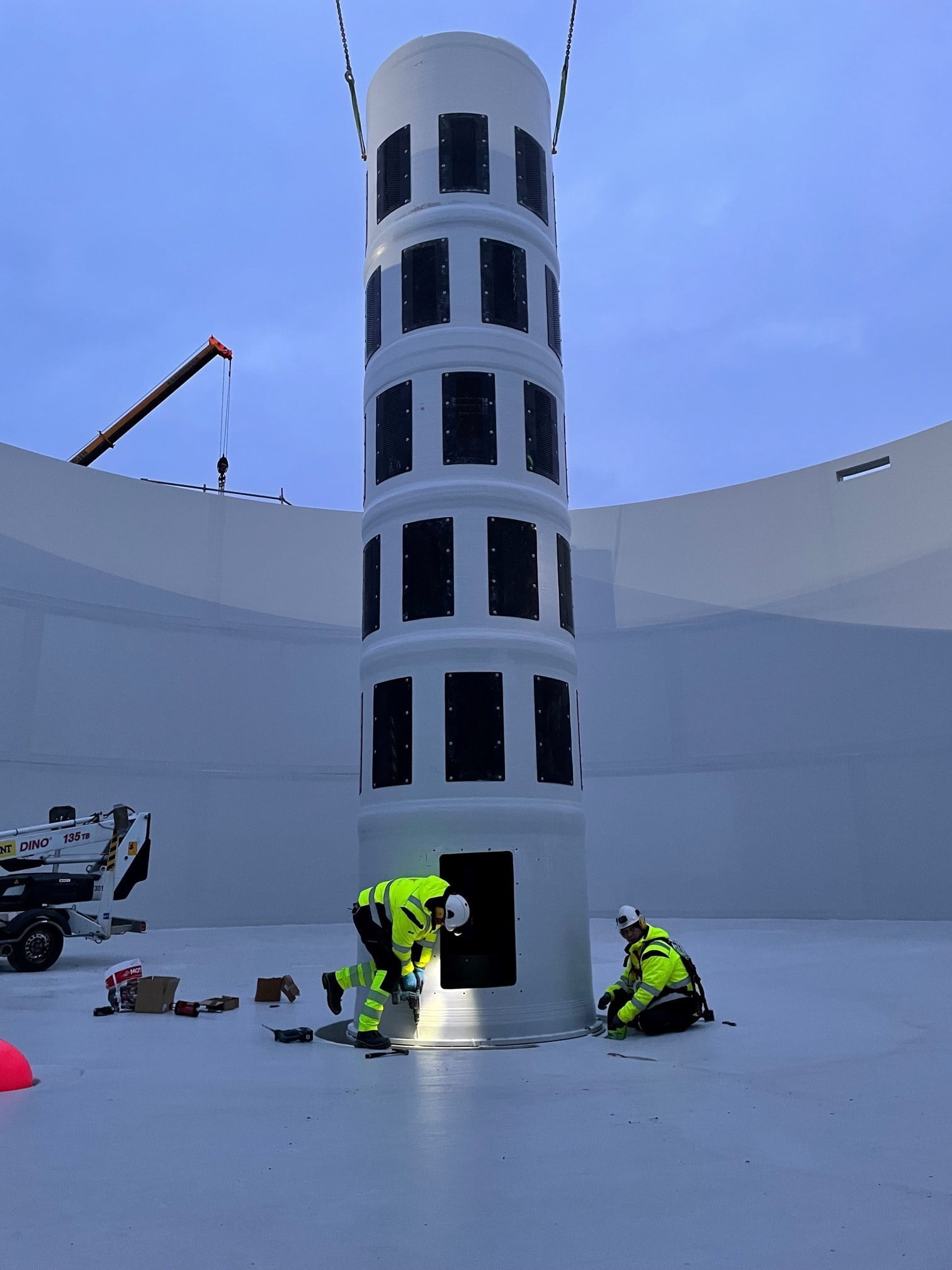
Fiberglass strainers
A pipe of over 9 meters is placed in the center of each tank. The pipe consists of an outer and a smaller inner pipe, where the outer pipe is manufactured with pockets. Fiberglass sieves are installed in these pockets. The pipes will function as a large sieve and are an important part of the flow-through technology at the facility. The specially developed technology will ensure fresh fish with strong heart muscles and good fitness.
The walkways are mounted above the tanks, forming a path between the pipes. High demands are placed on both design and quality. The walkways' custom design is adapted to the demanding conditions on the coast, and will withstand violent wind gusts of up to 60 m/s.
“It’s exciting to see that more and more people are choosing fiberglass,” says Stangeland. “The material’s advantages Perfectly suited for industries such as fish farming, and it gives us the opportunity to show all the uses the material can have.”

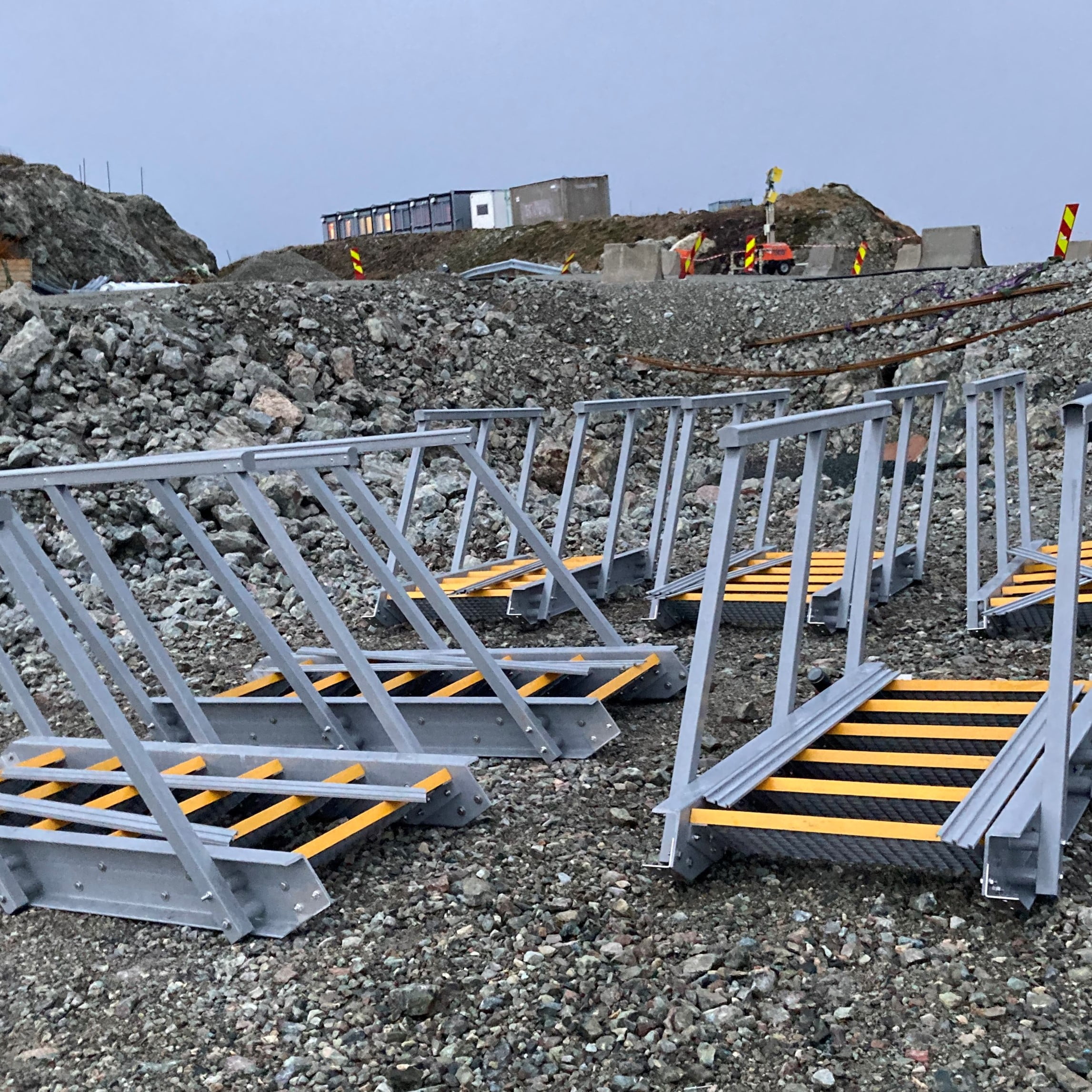
The fiberglass material is light and easy to handle. The walkways were transported flat-packed and assembled on site.
The best of sea and land
The project is based on Norwegian nature and how to best use it in a sustainable way. Bulandet Miljøfisk is building the facility according to the Bulandet model. It aims to use the advantages of seawater farming without many of the disadvantages.
The fish tanks are located below sea level, which ensures a lower lifting height. The tanks go 8 meters down and 5 meters below the sea surface. Energy-efficient pumps will lift seawater from a depth of 20-25 meters. This reduces the risk of both lice and other diseases. The water is pumped to an elevated basin, before the water is distributed to the fish farming tanks through natural fall. The plant will produce approximately 1,000 tons per year, and the first delivery is planned for spring 2022.
An important goal for Bulandet Environmental Fish is to give the salmon a nearly natural environment to grow up in, while at the same time having the opportunity to control factors that affect health and well-being.
We thank you Bulandet Environmental Fish AS for a fantastic opportunity and for the good collaboration. We look forward to following the pilot project in the future.

The walkways are partially assembled and then flat-packed in our workshop. This ensures easier transport and lower costs. The rest of the assembly work is carried out on site.
IN CORROSIVE ENVIRONMENTS IT IS THE FIBERGLASS
AS IT LASTS
Please contact us and we will help you find the optimal solutions.